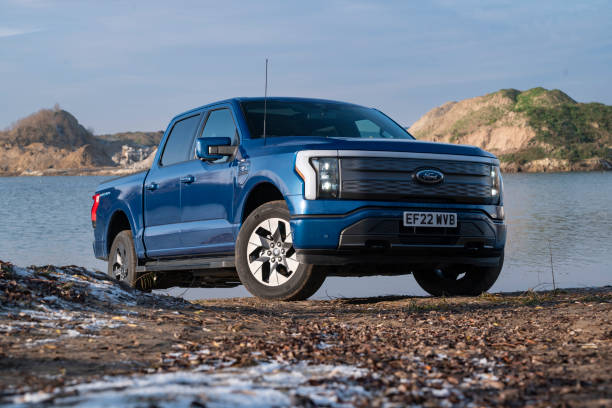
The Ford F-150 is America’s best-selling truck for good reason — it does everything from hauling drywall to commuting in comfort. But it also runs more tire size variations than almost any other vehicle on the road, and the difference between P-metric and LT tires can fundamentally change how the truck performs. This guide covers specific recommendations based on how you use your F-150, with actual tire sizes by trim level.
F-150 Tire Sizes by Generation and Trim
Ford uses different tire sizes — and different tire types — depending on your trim level and engine. This matters more on the F-150 than most vehicles because base trims use P-metric (passenger) tires while towing-focused trims use LT (light truck) tires. Here’s the breakdown:
| Generation | Years | Tire Sizes by Trim |
|---|---|---|
| 14th Gen (Refresh) | 2024–2025 | P265/70R17 (XL, XLT) · LT275/65R18 (Lariat, King Ranch, Platinum) · LT285/70R17 (Tremor) · LT285/75R18 (Raptor) · LT305/60R18 (Raptor R) |
| 14th Gen | 2021–2023 | P265/70R17 (XL, XLT) · LT275/65R18 (Lariat, King Ranch) · P275/60R20 (Platinum, Limited) · LT285/75R18 (Raptor) |
| 13th Gen | 2015–2020 | P265/70R17 (XL, XLT) · P275/65R18 (Lariat) · P275/55R20 (King Ranch, Platinum) · LT315/70R17 (Raptor) |
| 12th Gen | 2009–2014 | P255/70R17 (XL, XLT) · P265/60R18 (Lariat) · P275/55R20 (Platinum) · LT315/70R17 (Raptor) |
The most critical distinction: XL and XLT trims come with P-metric tires, which are designed for passenger-car-like ride comfort. If you regularly tow over 5,000 lbs or carry heavy payloads, upgrading to LT-rated tires is strongly recommended — they have stiffer sidewalls and higher load ratings that prevent dangerous flex under heavy loads. This is one of the most common tire mistakes F-150 owners make.
Best All-Season Highway Tires
If your F-150 is primarily a commuter and occasional hauler, a quality highway all-season tire gives you the best combination of ride comfort, tread life, and fuel economy.
1. Michelin Defender LTX M/S 2
The Defender LTX has been the go-to recommendation for F-150 owners who prioritize on-road comfort for years, and the M/S 2 update makes it even better. Michelin’s MaxTouch Construction distributes forces evenly across the tread, which translates to exceptionally long life — the 70,000-mile warranty is conservative based on real-world reports.
For F-150 EcoBoost owners focused on fuel economy, the Defender LTX also has one of the lowest rolling resistances in its class. The trade-off is that it’s a P-metric tire in most F-150 sizes, so it’s not the right choice if you regularly tow above 7,000 lbs.
Available in: P265/70R17, P275/65R18, P275/60R20, P275/55R20
UTQG: 820 A A
Warranty: 70,000 miles
Price range: $200–$260 per tire
2. Continental TerrainContact H/T
Continental’s TerrainContact H/T is specifically engineered for full-size trucks and SUVs. It’s available in both P-metric and LT-rated versions, which makes it versatile for F-150 owners who occasionally tow but don’t need a dedicated all-terrain tire. The +Silane compound provides confident wet grip without sacrificing tread life.
Where the Continental really stands out is ride quality — it rivals the Michelin for noise levels but comes in at a lower price point. For F-150 Lariat and King Ranch owners with 18-inch wheels, the LT275/65R18 version provides proper load capacity for towing while keeping highway comfort high.
Available in: P265/70R17, LT275/65R18, P275/60R20
UTQG: 800 A A
Warranty: 70,000 miles
Price range: $180–$240 per tire
Best All-Terrain Tires
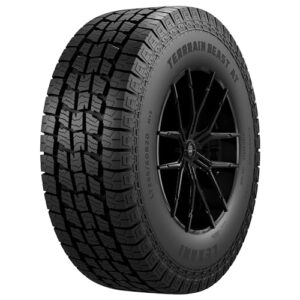
All-terrain tires make sense for F-150 owners who regularly drive on unpaved roads, construction sites, or do occasional trail driving. They sacrifice some road noise and fuel economy for dramatically better grip in mud, gravel, and snow.
1. BFGoodrich All-Terrain T/A KO3
The KO3 is the latest evolution of the tire that essentially created the all-terrain category. For F-150 owners, it’s the right choice when you need maximum sidewall protection and year-round capability including snow. The 3PMSF certification means it meets severe winter traction standards.
In LT275/65R18 (the Lariat/King Ranch size), the KO3 provides enough load capacity for towing while transforming the F-150’s off-road capability. Expect to lose about 1-2 MPG compared to a highway tire due to the heavier weight and more aggressive tread pattern.
Available in: LT265/70R17, LT275/65R18, LT275/60R20, LT285/70R17
Load range: C, D, and E
3PMSF rated: Yes
Warranty: 50,000 miles
Price range: $230–$310 per tire
2. Toyo Open Country A/T III
The AT III is the all-terrain tire for F-150 owners who want off-road capability without turning their truck into a loud highway cruiser. It’s noticeably quieter than the KO3 at highway speeds while still delivering solid off-road traction. The 65,000-mile warranty is among the best in the all-terrain class, and the lighter weight helps preserve the F-150’s fuel economy advantage.
Available in: LT265/70R17, LT275/65R18, LT275/60R20
Load range: C, D, and E
3PMSF rated: Yes
Warranty: 65,000 miles
Price range: $210–$275 per tire
3. Cooper Discoverer Stronghold AT
Cooper’s newest all-terrain entry (launched 2024 under Goodyear’s ownership) is quickly gaining fans in the F-150 community. It features 3PMSF certification for winter traction, wide open tread grooves for mud evacuation, and a competitive price that undercuts both the KO3 and the Toyo. For F-150 owners who want a capable all-terrain tire without premium pricing, the Stronghold AT is worth serious consideration.
Available in: LT265/70R17, LT275/65R18, LT275/70R18
Load range: C and E
3PMSF rated: Yes
Warranty: 60,000 miles
Price range: $185–$245 per tire
P-Metric vs. LT Tires: Why It Matters on the F-150
This is the single most important tire decision for F-150 owners, and getting it wrong can be dangerous.
P-metric tires (prefix “P” on the sidewall) are designed for lighter loads and prioritize ride comfort. They’re standard on XL and XLT trims. They’re perfectly fine for daily driving, commuting, and light hauling. But they have lower load ratings and softer sidewalls that can overheat and fail under sustained heavy towing.
LT tires (prefix “LT”) are designed for truck-level loads. They have reinforced sidewalls, higher load ratings (typically 20-30% more than comparable P-metric sizes), and are built to handle sustained heat from towing. They ride stiffer and cost more, but they’re essential for safety if you regularly tow over 5,000 lbs or carry heavy payloads.
If your F-150 came with P-metric tires and you’ve added a tow package or regularly pull a trailer, upgrading to LT-rated tires in the same size is one of the most important safety improvements you can make. Many tire shops will perform this swap — just make sure to verify the load rating covers your actual GCVWR (Gross Combined Vehicle Weight Rating).
Towing-Specific Tire Advice
The F-150 can tow up to 14,000 lbs (with the 3.5L EcoBoost and Max Trailer Tow Package), but your tires are the weak link in most configurations. Here’s what to keep in mind:
Always use LT-rated tires when towing over 5,000 lbs. P-metric tires on XL and XLT trims are not rated for the truck’s maximum towing capacity. This is a real safety issue, not a marketing upsell.
Inflate to the door jamb specification, not the tire maximum. When towing, some owners increase pressure by 5-10 PSI above the door jamb recommendation for the rear axle. This provides better sidewall support under load. Never exceed the maximum pressure printed on the tire sidewall.
Replace all four tires at once on 4WD models. The F-150’s electronic-shift 4WD system expects all four tires to have matching rolling diameters. Mismatched tires can trigger traction control warnings and cause premature transfer case wear.
Frequently Asked Questions
What tires come stock on the 2024-2025 Ford F-150?
It varies by trim. XL and XLT get P265/70R17 all-season tires, Lariat and King Ranch get LT275/65R18, Tremor gets LT285/70R17 all-terrain, Raptor gets BFGoodrich-supplied LT285/75R18, and Raptor R gets LT305/60R18. The type of tire (P-metric vs. LT) is just as important as the size.
Can I put 33-inch tires on my F-150 without a lift?
On 14th-gen models (2021+), most owners can fit 285/70R17 (roughly 32.7 inches) without rubbing on stock suspension. True 33-inch tires (like 285/75R17) require at minimum a 2-inch leveling kit up front to avoid rubbing at full steering lock. Wider than 285mm may need aftermarket wheels with different offset.
How long do F-150 tires last?
OEM tires typically last 40,000-50,000 miles. Highway tires like the Michelin Defender LTX can reach 60,000-70,000 miles. All-terrain tires average 40,000-55,000 miles depending on driving conditions. Rotating every 5,000-7,500 miles is critical for even wear, especially on 4WD models.
Should I upgrade from P-metric to LT tires on my XLT?
If you tow regularly above 5,000 lbs or carry heavy payload, yes. LT tires provide 20-30% more load capacity and much better sidewall stability under heavy loads. If your F-150 is purely a commuter, P-metric tires give you a smoother ride and better fuel economy.
What’s the best tire for F-150 fuel economy?
The Michelin Defender LTX M/S 2 in P-metric sizing has one of the lowest rolling resistance ratings in the light truck category. For EcoBoost F-150s where MPG matters, it’s the best choice. Expect 1-3 MPG less with any all-terrain tire due to increased weight and tread aggressiveness.